
Preventing Pollution and Restoring Shorelines
The Flathead Lakers play an active role in preventing water pollution in our watershed. We work with local, state, and federal agencies and elected officials to help shape policies and regulations that protect clean water and healthy ecosystems. We work with shoreline property owners and land management agencies to restore and improve shoreline habitat and prevent pollution from runoff and erosion. We also provide education and technical assistance to property owners with on-site waste water treatment systems like septic tanks to help them make maintenance and replacement decisions that protect the clean, clear waters of the Flathead.
The Two Types of Water Pollution
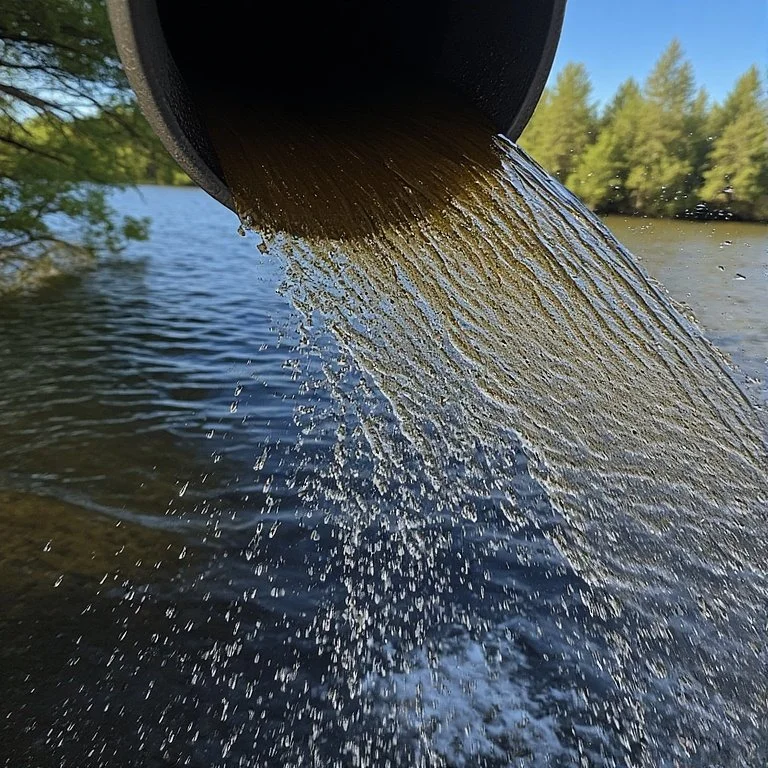
Point Source Pollution
is contamination that originates from a single, identifiable, and confined location, such as a pipe, ditch, channel, or tunnel. Common examples include effluent from wastewater treatment plants, industrial factories, and sewage systems. We prevent Point Source Pollution by:
Supporting regulations that reduce point source pollution and hold polluters accountable.
Fighting for science backed water quality standards.
Encouraging polluters to adopt new technologies and treatment methods to reduce their impacts.
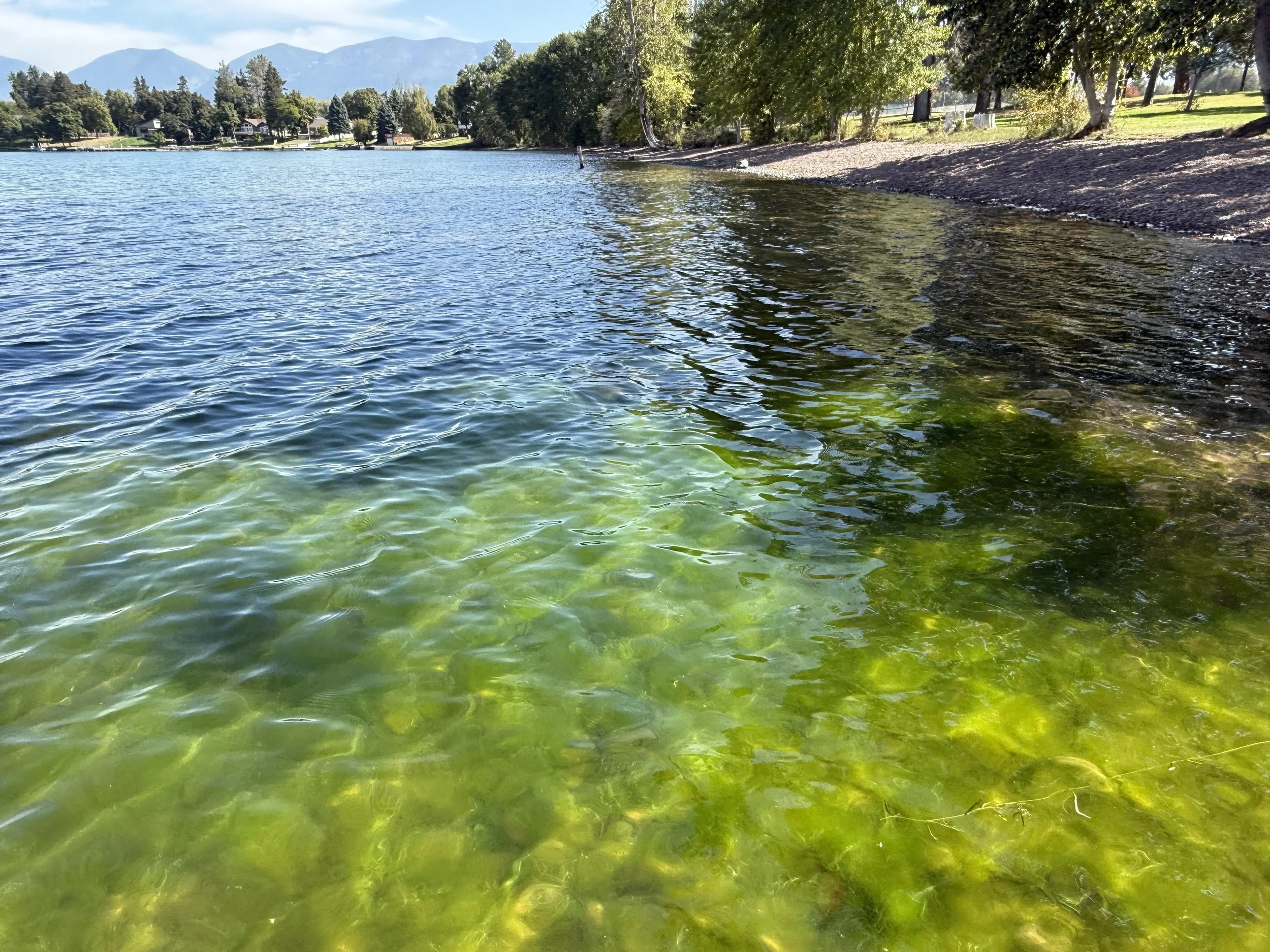
Non-Point Source Pollution
is the nation's leading cause of water quality issues, originating from diffuse, widespread land-based activities rather than a single pipe. It occurs when rainfall or snowmelt moves over the ground, picking up pollutants and depositing them into water bodies. Common examples include agricultural runoff, urban fertilizer, oil, pet waste, and sediment from construction sites. We prevent Non-Point Source Pollution by:
Restoring shoreline and riparian habitat.
Addressing stormwater runoff and erosion issues.
Encouraging responsible shoreline management.
Example Projects
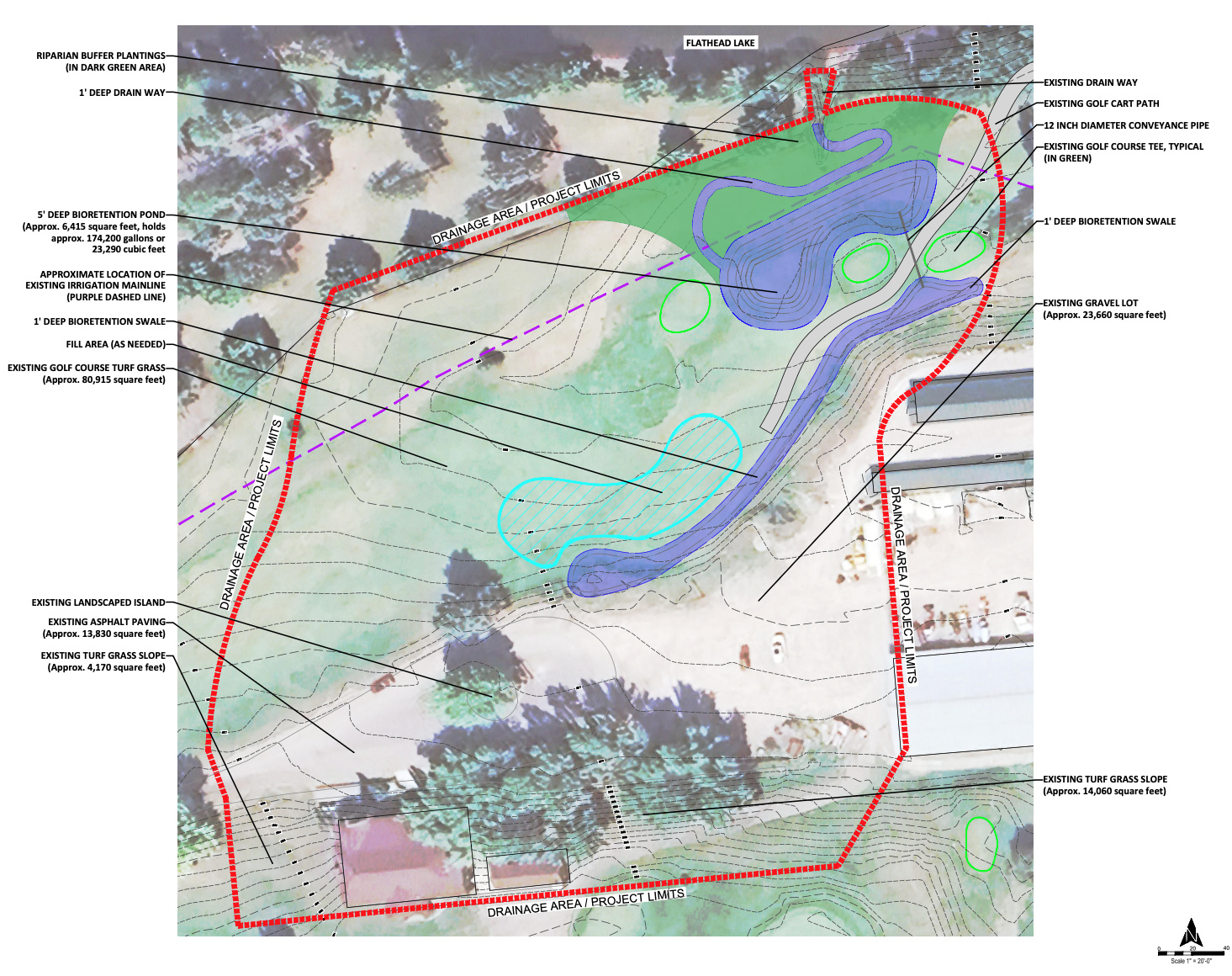
Pollution Prevention at the Polson Bay Golf Course
The Flathead Lakers, in partnership with the City of Polson, the Western Montanan Conservation Commission, the Flathead Lake Biological Station Pesticide Stewardship and Partnership Program, the Polson Community Foundation, and local stakeholders, are advancing an expanded stormwater and shoreline restoration effort at the Polson Bay Golf Course to improve water quality in Flathead Lake. Building on earlier planning, the project has grown in scope to address multiple sources of runoff across the golf course landscape, capturing and treating stormwater before it reaches the lake.
This project integrates a series of nature-based solutions, including bio-retention areas, retention ponds, and strategically designed vegetated buffers. Together, these features will slow, spread, and filter runoff, reducing sediment, nutrients, pesticides, and bacteria entering Polson Bay. The expanded design reflects a more comprehensive approach, moving beyond a single treatment area to a network of interconnected systems that better mimic natural hydrology and increase overall effectiveness.
A key feature of the project is its emphasis on multifunctional design. Stormwater infrastructure is paired with native plantings that enhance habitat, stabilize soils, and improve the visual character of the golf course. These improvements are carefully designed to coexist with ongoing recreational use, demonstrating how water quality protection and community amenities can be advanced together.
The project also serves as a visible, on-the-ground example of watershed restoration in action. Located on the golf course next to Boettcher Park, it offers opportunities for public education and long-term stewardship, helping residents and visitors better understand the connection between land use, stormwater, and lake health.
Ultimately, this effort supports the goals of the Flathead Lake Watershed Restoration Plan by addressing altered hydrology and degraded shoreline function, key contributors to declining water quality. By restoring natural processes and reducing pollutant loading, the project will help protect the ecological integrity and recreational value of Flathead Lake for years to come.
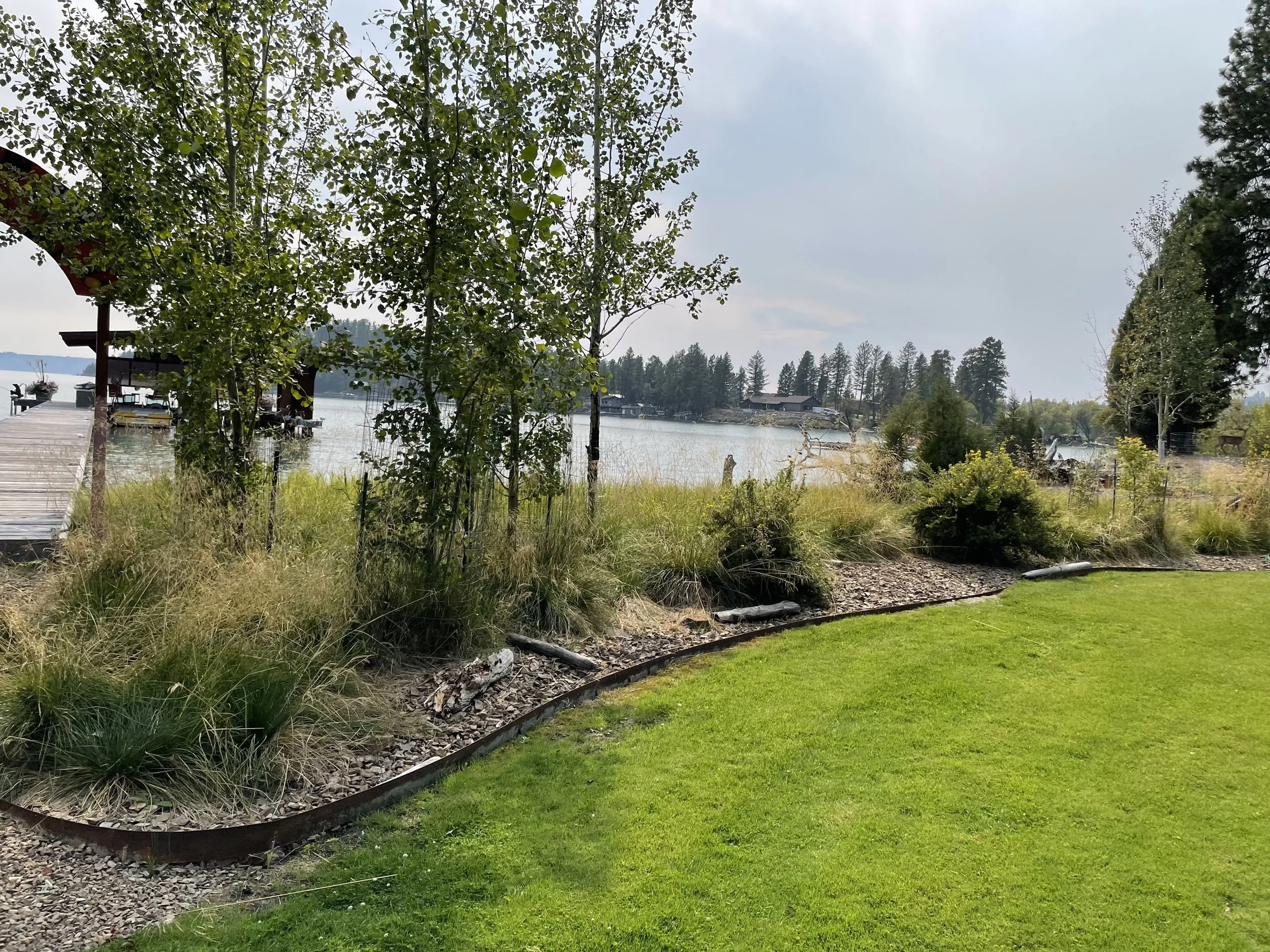
Shoreline Buffer Gardens
The Flathead Lakers and Montana DEQ have worked to help shoreline property owners develop and maintain shoreline buffer gardens to help capture nutrients, sediments, and bacteria from running off into surface waters and causing issues like algae blooms. These practical, aesthetically pleasing buffer gardens protect water quality, provide critical habitat, and reduce ongoing maintenance costs for homeowners.